
About this episode
Welcome to Close Calls, where we ask real business leaders to unpack their experience navigating and overcoming near misses in their careers. Each week, EHD Insurance President and CEO Mike Malinowski meets with c-suite executives to ask what went wrong? What saved the day? And how did it change the way they lead?
Each episode features candid conversations with c-suite executives about the hidden risks they’ve navigated in their careers, companies, and industries. Along the way, we explore the unique risks facing their industries and how preparation, including risk management and insurance, can turn a close call into a turning point.
Chapter — Jump to a Moment
| 01:13 | Meet Aimée Deraco |
| 04:30 | Aimée’s Path to CEO |
| 07:42 | The ESOP Journey Begins |
| 09:42 | The Human Side of Succession |
| 10:35 | Life as an Employee-Owned Company |
| 13:04 | Understanding the Risk Landscape |
| 14:15 | Digging into the Data |
| 15:20 | Creating Accountability through Process |
| 16:39 | Lowering Claims, Reducing Costs, and Stronger Renewals |
| 20:55 | Importance of Community Involvement |
Your host & guest

Mike Malinowski
Mike Malinowski is President and CEO of EHD Insurance, a Pennsylvania-based independent insurance brokerage, where he leads the firm’s strategic growth while helping clients navigate risk through tailored insurance, employee benefits, and risk management solutions.
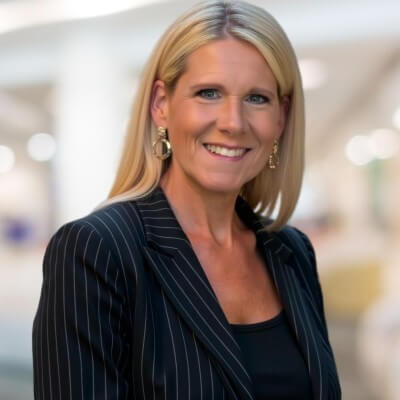
Aimée Deraco
Aimée Deraco is President and CEO of Brubaker Inc., a 100% employee-owned home services and commercial construction company, bringing more than 30 years of experience leading and growing businesses across a range of industries.
Listen to this episode
Transcript
Season 1; Episode 2 – Aimée Deraco
Transcript
Kate Truzzolino 00:00
You’re listening to Close Calls: An EHD Insurance Podcast hosted by our President & CEO, Mike Malinowski.
On Close Calls, Mike and his guests explore the near misses and narrow escapes experienced by c-suite executives and business leaders. We want to understand more about the unique risks facing different industries and how to overcome them. What better way to do that than by chatting with the leaders themselves.
And now - here’s your host, Mike Malinowski.
Mike Malinowski 00:28
Hello everyone. I'm Mike Malinowski, President and CEO of EHD Insurance and your host of the Close Calls Podcast.
On this show, we ask real business leaders to impact their experience navigating and overcoming close calls on the job. We ask what went wrong, what saved the day, how did it change the way you lead? And each episode features candid conversations with successful leaders about hidden risks they've navigated in their careers and companies. Along the way, we experience unique risks facing. We explore the unique risk facing these industries and how preparation, including risk management and insurance, can turn a close call into a turning point.
I'm excited today to be joined by Aimée Deraco, President and CEO of Brubaker Inc. Welcome to the podcast, Aimée How are you doing today?
Aimée Deraco 01:13
I am doing great and thank you for having me.
Mike Malinowski 01:16
Absolutely. We appreciate your time so much. And just for our listeners in our area, everyone knows Brubaker.
Aimée Deraco 01:24
That’s our goal.
Mike Malinowski 01:25
That's your goal. And you do so much from HVAC, homes, plumbing, and I always know you as home and commercial services. So, if you're telling our listeners out there in podcast world, what's the best way? I know being EHD, Engle-Hambright & Davies, all these things that we're called all the time. When you talk about Brubaker, what do you guys go by per se?
Aimée Deraco 01:49
Well, we used to be Brubaker Inc., which some people called us that. Some people called us Brubakers. Some people called us Brubaker. Over the last 12 months, we did a full rebrand of the company. So today we just go by Brubaker. Our official name on our tax returns is Brubaker Incorporated, but that's a little too formal. We're trying to be a little less formal these days. So what people know of us at Brubaker is we have our appliance retail store. We have a full kitchen and bath remodeling center. And then we do commercial plumbing and HVAC. Most of our work is design build. So, we're drawing all the plumbing or HVAC systems in new buildings and then we're installing them. And then on the residential side, we do plumbing, HVAC, and electrical.
Mike Malinowski 02:39
Okay, gotcha. And has there been anything new that you've done in. I know you've been at 1945, I think around May. So, has everything been since day one that you've started it or was it always residential commercial mix?
Aimée Deraco 02:54
I actually don't know if he (Wayne) was commercial in nature. I think it was more residential, but it was in the plumbing and spouting business. Not quite sure why plumbing and spouting at the same time together, but that was a passion of his. And then slowly overtime, his son Jerry was on the HVAC side. Don, his son was very into plumbing. Dave, his son, was into plumbing. And then they opened the appliance retail store. I think just with the nature of plumbing, people saying, "Hey, I need appliances." They didn't have dishwashers back then, but as time went on, the more people asked for, the more Wayne would expand the services. So over time, I think in the '70s is when his sons took over. And that's when we got more into the commercial side of things and expanded into the kitchen and bath remodeling space. And we've kind of taken it from there and continued to run with it.
Mike Malinowski 03:58
That's awesome. Yeah. And plumbing, water goes everywhere. So, call Brubaker so you make sure you don't have those problems, right?
Aimée Deraco 04:05
We hope when water goes everywhere, it's not because of us. We're the ones that are trying to fix it.
Mike Malinowski 04:10
There you go. And we'll talk about those close calls in a little bit. Tell me a little bit about your career and how you got to this point at Brubaker. I mean, President and CEO of such a wonderful company. What was your ladder to that success? If you could talk for a few minutes about yourself.
Aimée Deraco 04:30
So, I started running businesses early on in my career, started in the full-service hotel business. So went from food and beverage management into hotel management. Went from there to running a large-scale delivery and staffing company. John Way here in Lancaster who owned Way Services. He owned Way Delivery and then he owned four Adecco franchise offices. I was hired by Mike Doner, who is now the owner of Traffic Control Services and Flagger Force. Mike hired me in 2004 after the hotel was sold to run their Lancaster Adecco office. So, overtime I became the general manager of all our franchise offices. And ultimately when Mike left to run Flagger Force full-time, they promoted me to COO and I ran the company for John. And then at the time, eight years later, John decided to sell. I tend to lose my job every time people tend to sell a business. So, I was at the hotel eight years, then I was with John for eight years. John and I successfully sold the businesses together. And then I got into the large scale, I would say, marketing business. So, I became the president of a local agency called Synapse that serves very large corporate clients like Ames True Temper, Iran out of Canada. Working with high-end marketers wasn't the most fun job I've ever had. I realized I really had a passion for people and I really had a passion for small business. And I was getting to work with a team of people, but always working for corporations wasn't what really made me want to get up in the morning. So, I was there for about four and a half years, decided to go out on my own and consult with small businesses to help them grow and scale their business and their marketing operations. And then after about a year, I rolled my business in with Steve Wolgemuth at WYDOP, which was a digital agency that served small business customers. So really loved that. I was there six and a half years. Brubaker was one of my customers. So worked with Don, Jerry for many years and their CFO Bruce, just to help them, just improve their marketing in general, but also started consulting with them on the business side of things. And when they decided they were going to go ESOP and they were going to look for a new CEO, Don Brubaker asked me if I would apply for the job. And I said - nice. Awesome. And here we are. Three and a half years later, here we are.
Mike Malinowski 07:10
Three and a half years later. And that is a breadth of experience that you bring. And speaking of that, I know how proud you are and I know how exhausting it was. And I can tell when we had lunch about the ESOP process. I know that is not a simple process, and especially in your world, in the HVAC, the plumbing, the commercial, that's a tough thing to do. So, can you talk a little bit about that ESOP process and all that experience you brought to really push that over the goal line?
Aimée Deraco 07:42
Yeah, it's really difficult. I think in the world of transitioning to ESOP, it's a transaction like anything else, but nobody really talks about the emotional toll. It takes on owners that have raised this baby that is a company.
And when you have employees that have been here 30, 40 years, and a lot of them that have been there that long, making sure they're going to be taken care of. And it's why the Brubakers chose ESOP instead of private equity or some of the alternative options out there because they wanted to make sure their customers were going to still experience what Brubaker has always had, which is a high level of empathy and customer service for the people that they work with and for the people they employed. When they were looking to go into this process, that's what was in their mind. I want to take care of my employees, and we want to take care of our customers. But they didn't think about what it was going to feel like to detach and transition to our board of directors instead of being in the day-to-day of the company and not making those decisions anymore. It was a tough transition to make sure that I was being mindful of how they felt, but also looking out for the company. And also, these are my bosses. I'm negotiating on the other side of the table about what we're going to spend. I think there's a lot about ESOP and going through the ESOP process that attorneys and accountants don't talk about. And that's been a passion of mine to really help people that are considering the ESOP journey and what that looks like and maybe helping them better prepare for the emotional side of the transaction, not just the financial and the fiduciary and the liability and all the contractual obligations that come along with it, but the other stuff, the feelings that are involved there.
Mike Malinowski 09:42
Well, that's an awesome overview of it. And just for our listeners, I see Aimée on LinkedIn a lot. If you're going through that ESOP process, I'm sure if you send her a message, she'd be happy to give you a couple pointers on that because I just know the feedback that I've heard is how wonderful that process that after you got through it has done for Brubaker.
Aimée Deraco 10:07
It's been absolutely incredible. And I'm sure Don and Jerry would say, and Dave would say the same thing, it's the best thing they ever did for the company. While going through it was difficult for everybody, the outcome of it is definitely great. We're coming up on our third year as an ESOP and just the transformation just with employee retention and employee buy-in and morale and what it's done for our culture has been tremendous.
Mike Malinowski 10:35
And how many employees do you have in the ESOP right now?
Aimée Deraco 10:38
We have 104 employees and I would say at least a hundred of them are part of the ESOP at this point.
Mike Malinowski 10:44
Get out. That's awesome. In three years, that's great. Well, moving on here a little bit, how'd you meet EHD? You inherited us right?
Aimée Deraco 10:54
I did. They were handed to me. I was given EHD by default, and it's really been wonderful. Angie, my director of human resources, she doesn't love people easily, but when she loves you, you've done something really great. So, we have vendor partners that don't always make her life easier, but the ones that do, she holds them very near and dear. So when I came in, EHD was one of the, "Please do not do anything to disturb this relationship." When a new CEO comes in, it's like, "Is she going to change banks?" All of our vendor partners were reaching out, "Hey, I'd love to meet with you," because they just want to make sure that I know how great the relationship is. So that was one when I came in that I was not allowed to mess with. And I learned over time, I don't know how long, the relationship spans back a long time. And I actually guessed Angie, and I don't think that I got an answer, but it's been so long, I don't think she remembers.
Mike Malinowski 11:59:
I was talking to Todd who had lunch with Angie when we were talking the other day, and I know it's been over 30 years. It's awesome to grow together and to see all the transformation and how much growth Brubaker has seen. So, it's great.
I know we've talked a little bit about close calls and what leaders are doing to help their companies. And I know we talked about handling the insurance program and the risk management program. I know you've worked very hard on accountability, and I know dealing with a lot of residential claims that you had historically because of some accountability issues. So, can you tell our listeners a little bit of the process you went through that's definitely shown great improvement for us on the insurance side because of your ability in the marketplace to get effective renewals, things of that nature. But if you could talk a little bit about what you implemented when you came in, because I know that's been a key factor for Brubaker.
Aimée Deraco 13:04
Sure. So, for me, when I came in, this is probably the largest scale, most complex insurance environment of any of the companies I've run because we have seven unique business units. They all come with different liabilities, all come with different risks when we look at workers' comp, whatever it is. It was helpful to me when I came in. I remember the first meeting that I had with your team just to understand the entire makeup of our insurance program. And there were some tough conversations that had to be had there because to look out for our best interest, there were some things that were not going so well, which were impacting our renewals, were impacting what we were paying. And of course, I looked at our overall insurance program, and my first thought was, "Wow, we need to get these costs down. This is a lot." So, I really dug into each part of that, like our vehicle insurance and what does that look like for heavy equipment. Because I've never managed a company that owned heavy equipment before. Workers' comp, why is our workers' comp so much higher for our remodeling team than it is our commercial construction guys? And so, stuff that didn't make sense, your team was so good at just helping me understand the makeup.
Then we had a conversation about some of our claims, especially on the residential side of our business. And as we started reviewing those, I kind of walked away and we only were looking at the year to date. I started in January, and this was probably within the first quarter of me working here. And I went back to our CFO and I said, "Bruce, do you have historical information? I don't know if this is normal for the industry, but this seems excessive to me." Between Bruce and I, we went back three to five years and really started looking at overall claims by the month and by the year. And what were the total of those claims? Were there repeat offenders? Were there repeat departments? What was going on? And it became very clear that first and foremost, we had way more claims than we should have. It also became clear that there was no accountability in place at all whatsoever. In most cases, the team members walked out of a home or a business after something happened. We always took care of it. It always got fixed, but they didn't hear. They have no idea what happened after that. They just went on to continue to do their job. So, we realized very quickly that we were at risk of the actual insurance company that was covering us. They were potentially going to drop us because we were so excessive in our claims. We had four or five repeat offenders. We had to put an accountability program in place that you can't have three claims in one year and nothing happened. So, there were warnings, then there were written warnings, and then there was termination. When you're in there working on a water heater and you forget to tighten something and somebody has a flooded basement, you know if that's happened twice already this year, you better start checking everything because that third time you're unfortunately not going to be working for us anymore.
And so that was huge. And we've seen, of course, we still have the fluke things that happen, but we've seen a dramatic decrease in homeowner claims and things happening like that.
Mike Malinowski 16:39
Well, it's been so impactful, Aimée. If we could any of our listeners take away what you've done has been so impactful because of our ability as your broker, even to represent you in the marketplace, and that you have these types of programs in place. It gives us ability to communicate to potential carriers. Now you've been with one for a while, which has done great for you and it's been a good partner. But if something ever happens, to your point, costs would skyrocket and then it impacts everybody within the company.
Aimée Deraco 17:12
And our renewal came way down for everything this year, which is amazing. I love that your team put so much time and effort into still getting us the best coverage, but reducing costs. But now I look at those, I don't worry going into a renewal like, wow, what's our liability going to look like this year because we had so many claims this year. It's actually our costs are coming down now, which we never thought would happen.
Mike Malinowski 17:48:
And when you're growing, and it's not usual in this marketplace when you're growing and insurance costs are coming down and exposures are going up. I mean, I think you probably have around 80 units too – the vehicles. And it's just you're a big customer, so it's nice to see that. And a lot of that is a tribute to what you've done to be able to avoid those close calls because we couldn't have said that four or five years back when you took over. So, thank you.
Aimée Deraco 18:16
I would've never blamed anyone for dropping us at that point, to be honest. And it's not that your team hasn't been talking about this, but the Brubakers, they were at the end of their career. I mean, we're talking guys in their 70s and 80s, they're not trying to create new processes and more levels of accountability. They're just trying to keep everything stable, keep employees working and keep them happy. And for me, a lot of those team members that we had to put that accountability in place for don't even work here anymore, and they probably shouldn't have for a while.
I think that's the trap a lot of business owners especially fall into, and especially as they're towards the end of their career. It's like, let's just keep everybody happy sleeping babies. That accountability needs to be there. But I also understand that we have human beings that work for us. And when you hire humans, you can put every control in place, you can put every level of accountability. There's still going to be mistakes that are going to happen. So, it's not that we have an expectation that there's never a homeowner claim or a mistake, but I think it's the border of what's excessive and what's not excessive. I trust your team to be honest with us about that assessment because they don't expect us to never have a claim either. But if they're working on two claims every single month for 12 months out of the year, it's a lot of work on their side, a lot of work on our side. And for the homeowner, it's an extreme inconvenience.
Mike Malinowski 19:50:
Yeah. And the reputation that you have in the marketplace, which you've put a lot of hard work into it and we see the results. It’s good to see a good result.
Aimée Deraco 19:59:
I love that our customers always say, "Oh, but if Brubaker makes a mistake, they make it right." And that's great. I love that we do that and that's our reputation, but I'd like less of making it right. There you go. That's always the goal. Let's not have to make it right a lot.
Mike Malinowski :20:14:
Well, thank you so much for sharing. I'm sure everyone listening will greatly enjoy that. And before I let you go, I did want to cover one last thing for you, Aimée, because we talked about the company so much and the involvement that Brubaker has in the local community. And if you go to brubakerinc.com, you can see all of the charitable things that you do too. And I think it's important for anyone who is tuning in and listening that you're just not about an ESOP and a company, but you care about the community. And if you can just talk a few minutes about the stuff that you're passionate about and that the Brubaker was passionate about historically, it would be great to hear.
Aimée Deraco 20:55:
Yeah, there are some things that we still do today that the Brubakers have been involved in for a long time. I'd say first and foremost is Schreiber and some of the children's services in our community. Our team has done a charity softball tournament now for, gosh, I don't even know how many years it goes back. And it just gets bigger every year. So many members of our team get involved. So not only is it great on a Saturday to see 30, 40 team members come out and play softball, and they know what they're playing for, but to see the organizations that reap the rewards for that. And back in the day, Schreiber used to get all the proceeds and now it's split. So, we give Schreiber just a separate yearly donation and obviously we go to their gala, but they're also a customer. So, it's not only now been us giving to a charitable organization, now their CEO and their employees know our team because they service their homes and they service their business. We did a project out at Schreiber with our kitchen and bath remodeling team to redo the room that they utilized to teach independence to their patients, which that was a really cool project for our team to be involved in.
Another thing we started this over the last three years is the Chamber’s Discovering Paths program. We have seven members of our team that are mentors to an 11th grade student. We have male and female mentors on our team. So, we're with them for a whole school year. We do one half day a month with them, teaching them career exploration, getting them involved. Some of them might be interested in the trades, but a lot of them are not. And then helping them set up two to three job shadows in that year, and then just being there for them to answer any questions, help them understand what they want to do, what they maybe help them learn what they don't want to do. It's an incredible program. I mean, for anybody listening or watching this, if your company wants to be involved with mentorship, the Chamber’s program is really awesome. They're taking mentor applications now. So, we really love that.
And then being involved up at ABC in their apprenticeship program, that's been key for us as well, not only from an industry perspective, but just really getting the merit shop philosophy out there, helping younger people understand that the trades are such a lucrative career. And we cover their apprenticeship for the three years while they work for us and get paid to work for us. So, we love doing that.
And then, I mean, you name it, we probably have six, seven other charities that we either give support to, volunteer or donate to. We're involved in the Lancaster City Alliance. We're involved with Hope, Inspire, Love, which helps women and men that were involved in human trafficking and now trying to get them the support that they need to stabilize their life. And that's been a really rewarding place for us.
Mike Malinowski 24:19
That's great, Aimée. I can see the passion and love that you have. And getting the next generation in any business, especially the trades, to realize you can have a good career, you can work for a great company with great benefits. So, thank you so much for sharing that. And thank you for everything today. I appreciate it. And we could see the passion on your face and when you talk about all that experience you brought.
Thank you so much for joining me on today's episode of Close Calls and for sharing your experience and insights with all of our listeners. I also want to take a moment to thank our incredible audience for listening. We have a great lineup of guests in our inaugural season, and we hope you tune into more episodes in the future. In the meantime, don't forget to subscribe, rate, review, and share our podcast. And once again, thank you, Aimée. And until next time, I'm Mike Balinowski, President and CEO of EHD Insurance. You have a wonderful day.
Aimée Deraco 25:21:
Thank you.
Kate Truzzolino 25:23
Thank you for listening to this episode of Close Calls, an EHD Insurance podcast with Mike Malinowski. To hear future episodes of Close Calls, please subscribe on Apple Podcasts, Spotify, Google Podcasts, or wherever you listen to podcasts. To learn more about EHD Insurance, please visit www.ehdinsurance.com.
Never miss an episode
Watch on Youtube or listen on Apple Podcasts and Spotify