
About this episode
In this episode of Close Calls, Mike Malinowski talks with Peter West, CFO of Signature Custom Cabinetry, about how proactive healthcare initiatives are transforming employee well-being and business outcomes. From onsite medical and mental health services to a life-saving cancer screening, Peter shares how investing in prevention helps employees thrive while reducing long-term risk.
Chapter — Jump to a Moment
| 01:13 | Meet Peter West |
| 03:26 | Building a Better Benefits Strategy |
| 05:35 | Creating an Onsite Health Clinic |
| 07:41 | Removing Healthcare Barriers |
| 09:07 | Mental Health Support at Work |
| 12:33 | Using Data to Drive Better Outcomes |
| 13:00 | The Cancer Screening That Saved a Life |
| 14:39 | The ROI of Prevention |
| 16:23 | Giving Back to the Community |
| 19:14 | Advice for Other Employers |
| 20:44 | Closing Remarks |
Your host & guest

Mike Malinowski
Mike Malinowski is President and CEO of EHD Insurance, a Pennsylvania-based independent insurance brokerage, where he leads the firm’s strategic growth while helping clients navigate risk through tailored insurance, employee benefits, and risk management solutions.
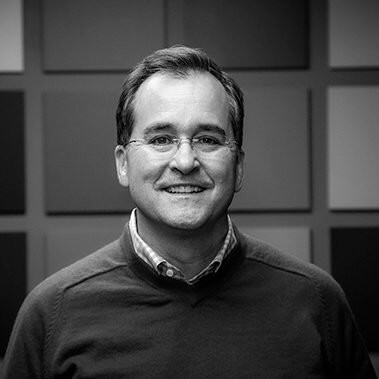
Peter West
Peter West is Chief Financial Officer of Signature Custom Cabinetry, a Pennsylvania-based manufacturer of high-end custom cabinetry, where he oversees financial operations and helps drive the company’s strategic growth and long-term success.
Listen to this episode
Transcript
Kate Truzzolino 00:01
You’re listening to Close Calls: An EHD Insurance Podcast hosted by our President & CEO, Mike Malinowski.
On Close Calls, Mike and his guests explore the near misses and narrow escapes experienced by c-suite executives and business leaders. We want to understand more about the unique risks facing different industries and how to overcome them. What better way to do that than by chatting with the leaders themselves.
And now - here’s your host, Mike Malinowski.
Mike Malinowski 00:27
Hello everyone. I'm Mike Malinowski, President and CEO of EHD Insurance and your host of the Close Calls Podcast.
On this show, we ask real business leaders to unpack their experience navigating and overcoming close calls on the job. We ask what went wrong, what saved the day, how did it change the way you lead? Each episode features candid conversations with successful leaders about hidden risks they've navigated in their careers and companies. Along the way, we'll explore unique risks facing these individuals, and how preparation, including risk management insurance, can turn a close call into a turning point for your organization.
Today we're going to talk a little bit about health insurance, and I'm excited to be joined by Peter West, Chief Financial Officer of Signature Custom Cabinetry. Welcome Peter to the podcast.
Peter West 01:13
Great. Thank you for having me, Mike.
Mike Malinowski 01:14
Absolutely. Absolutely. Peter, tell us a little bit about you and Signature Custom Cabinetry, if you could.
Peter West 01:21
Absolutely. So again, my name's Peter West. I'm the CFO here at Signature Custom Cabinetry. I've been here for about 10 years. Been in Lancaster County. I'm not originally from Lancaster County, my wife is. We moved here in 1998 after exiting the military. My last duty station was Fort Drum, New York. And it was a choice between Southeast Alabama or Lancaster, Pennsylvania. And we made a great choice. Love this county, love the people here. I have two daughters – married. Both my daughters live in Nashville. Loving life down there. We love visiting.
And Signature, I've been here for 10 years. We're a custom cabinet manufacturer here in Ephrata, Pennsylvania. And I believe we're the largest by sales and by associate count of all the custom cabinet manufacturers here in Lancaster County. Been in business for about 34, 35 years at this point. We sell through a network of dealers across the U.S., but mostly here in Central Pennsylvania, the Mid-Atlantic region up into New England. It's about 70% of our business. And the rest of it comes from the West Coast and the Southeast.
Mike Malinowski 02:48
Signature has done so well, and you’re so involved in our local community. And we'll talk a little bit about that later, Peter. How many employees do you currently have right now at Signature?
Peter West 02:58
We currently have 130 employees, both full and part-time, but most of those full-time. About 85 in the manufacturing setting.
Mike Malinowski 03:05
Gotcha. Well, first off, thank you for your service. I know you have a long list of service. Thank you. And we'll hope there's no Alabama listeners since you're an Auburn tiger, I believe so. That's right. We'll kind of separate that out.
Peter West 03:19
Love them all except for on game day.
Mike Malinowski 03:22
Well, tell us a little bit how you got involved with EHD.
Peter West 03:26
I've been personally involved with EHD since I believe 2009. At that point I was doing CFO contract consulting with a few different small entities. I met Tara Dambach and brought the EHD team on board at a couple locations that I was working with. And everywhere I've gone since then, EHD's been one of the first calls I've made. So, when I got to Signature almost 10 years ago, we didn't have a broker here. And we were a unique animal. We were direct with the health insurer. We were direct to Aetna. I didn't even know that was possible. And they'd been direct for 20, 25 years at that point. So, I saw some pretty low-hanging fruit coming in on services that we could add to our benefits plan that would benefit our associates and be able to save a tremendous amount of money. So just like at other locations, Tara was one of the first calls I made, and it's been a great partnership ever since.
Mike Malinowski 04:44
Awesome. We love to hear that. And we thank you once again for our partnership over a long time, Peter. And now digging into the essence of the podcast, close calls, and yours is more from a preventative perspective, the wonderful things that you have done from the health insurance standpoint. We're about employees, so the most important thing is to protect our employees. Can we talk a little bit about some of the things that you've put in place? I know you've definitely done some pre-screening that saved lives, quite frankly. And I'd love if you could touch on that a little bit for our listeners, just to let them know some of those things that you've done at Signature Custom Cabinetry, which are just remarkable things that you've concentrated on at the senior level that have really helped your employees in their health, not just at work, but at home.
Peter West 05:35
Yeah, absolutely. Thank you for asking. The biggest thing that I can think of that has had the biggest impact on all of our associates, but me as a leader, I think, is the introduction of an onsite clinic here. It's a partnership with Penn Medicine HealthWorks. They're a network of clinics throughout the county, but they're right here on site with us at Signature. And I can watch employees walk across the street to go see our PA and RN that are there every single day. And I absolutely love it. And that was a partnership that took five or six years to develop in conjunction with EHD, Penn Medicine and us. And it simply started with a conversation. Penn Medicine HealthWorks, a gentleman named Teke Drummond wanted to have a simple conversation. I thought it was going to last 30 minutes. About three hours later, we came out of the conference room, and my head was spinning, but in a great way.
We started that process with simply saying, "You know what? Let's put a nurse navigator on site that's going to come out and walk your floors, the offices and the manufacturing facility once every two weeks." And that's what we did. And it took about four to six months to break down some barriers with people just to understand why do you want this as an employer? Why do you want us to talk to these people? And nothing was forced. So, once she built those relationships, we saw certain things take off. And the next natural step for us was introducing an onsite clinic. So, our employees get to seek healthcare here onsite during work hours, and they get to do it while being paid. I was always one of the first people to complain about why people don’t get their physical every year. Why don't they do this preventative screening?
And then in a manufacturing environment, and until we put this clinic in across the street, I was like, wow, it's punitive for a production employee to seek healthcare. As a salaried person my whole life, I can go to the dentist when I want, the eye doctor, go get my physical, do whatever I need to do, and make up my work as I can. And when you're working in a production environment, that can't happen. So, they either take a vacation day, a part day, or sick hours or something. Here, we still ask them to schedule appointments and they get to walk across the parking lot instead of taking a half a day off or a full day off to go get their physical or any other doctor appointment that would fall under the primary care provider's per year.
Mike Malinowski 08:35
Now you’ve been doing that, Peter, for about three years, correct? Remember in one of our conversations, you mentioned how hard it is to get a primary care doctor, especially if you're in the type of manufacturing world. And I think you mentioned maybe three to five times that the employees are able to get a primary care visit, which is so abnormal in our day and age. So, I know that's been good, especially for some screenings and mental health you've talked about. If you can touch on that a little bit it would be great also.
Peter West 09:07
Actually, they can go see their PCP as much as they would like. What we're averaging 5.3 per members of the clinic per year. So, for instance, myself, I've probably been over there eight to 10 times in a year, but it's for all these little nagging things that I would probably just ignore as opposed to going across the county to my primary care physician at the time. And it's easy to walk over there and have them addressed, which then helps with productivity, keeping people here. So yeah, we're averaging 5.3 times just on the medical side. And then you mentioned mental health. On June 1st, we were able to take advantage of another service that Penn Medicine was providing. We have a behavioral counselor on site two days a week, Wednesdays and Thursdays all day. And the beautiful thing about that is Kyle, our PA, who's over there full-time, he's recommended to at least 20 or 25 people.
He's told me to use our EAP program or he could help them schedule an offsite mental health counseling appointment. I can tell you, we've had one EAP appointment in the last three years that's come through. So here already in the short six weeks that this has been open, we have nine people who've taken advantage of talking to our mental health counselor who's on site. It's great because he can just walk them down the hall and make an appointment for them now.
Mike Malinowski 10:55
That's so important because it's one of those things too about being proactive, Peter, like you guys are, especially after COVID. Notice with many of the companies we deal with, but not many are being proactive because to your point, a lot of people don't want to pick up the phone, really look in the mirror and say they may need help. And you're on the cutting edge of that. You're avoiding so many problems, I think, downstream by offering that to employees, let alone during work time. It's just an incredible thing that Signature has done. And I hope other companies mirror, including EHD, because it's been so impactful and you continue to offer those services.
Any plans of how you move this even further down the road? Or are you maintaining the course for a little while?
Peter West 11:42
Yeah. So, on the mental health, we're going to maintain the course for a while. We get reports on a quarterly basis from Penn Medicine and statistics and data. It's very important to us. So, we want to see where this mental health piece takes us, but there's no doubt in my mind it's going to be hugely successful. There's always going to be a stigma around mental health and seeking care from just the person who doesn't want it out there as well as other people looking at it. And that was part of our conversation leading into this. Are people really going to use this? We're up here in effort in Northern Lancaster County, blue collar workforce. Will they really do this? And it's surprising how many people are not shy about using the service.
Mike Malinowski 12:33
Yeah. And it's great in trying to figure that out. You've taken such a great first step. And I know a lot of the stuff, Peter, for you to prevent close calls, the nature of this podcast, I know you're a big data guy. So, if you can talk how important it's been for you to avoid some close calls, because I know you dig very heavily into the analytics on the health insurance side. If you could talk for a minute or two about that it would be great.
Peter West 13:00
Yeah, absolutely. And even before we get into the data, a huge close call, which again, will tie back to our data and tie back to our claims is we had an individual who hadn't been to a primary care physician in 20 years – 20 plus years. We opened up the clinic here. He was one of the first ones to enroll. He went and saw him. And then last year, it would've been the end of 24 into 25. They reduced the age for colonoscopies from 50 to 45, and this gentleman was 46 years old. So, Kyle, our PA was saying, "Hey, you need to get your screening. You need to get your screen." And on that he said, "Well, I don't really want to take a day off work to go have a colonoscopy." So, Kyle came to me and said, "Hey, when are you guys shutting down between Christmas and New Year?" He made the appointment for this gentleman.
He went and had the colonoscopy and they found stage two colon cancer. And a few weeks later, he was having the procedure. He was back to work six weeks after that, and he's thriving and doing extremely well. And Kyle, our PA, said a year later, this would've been a completely different outcome.
Mike Malinowski 14:20
That gives me goosebumps, Peter. I mean, that's saving a guy's life. Because a dedicated employee who wants to work and not just work for us and maintain a profit, but taking care of him at the human level just had to be so impactful for him and his commitment, I'm sure, to the company.
Peter West 14:39
Yeah, absolutely. And I tell you what, he is one of the vocal people now. He's not a vocal guy, but when we talk about the clinic and stuff, he will raise his hand and speak up. It's awesome to see. And on that, from the data side piece and how it ties back even to EHD is your team, Ariel and Tara and Kirk were able to tell me, OK, we knew what that stage two cost us. I want to say it was a little over 40-something thousand dollars by the time all the bills came in. But Ariel was able to go back and find research that says stage four, which we know it would've been had it gone undetected, had it not been for the clinic and Kyle, would've been north of $250,000 – $260,000. So right there, if you're just looking for the numbers, it pays for itself. If you're not even looking at the emotional human aspect of it.
Mike Malinowski 15:36
That's tremendous. And the cost of healthcare is a lot. It's not even the cost of health insurance, right? It's the difference of managing that and let alone the emotion. And for the company, when you have someone who has cancer, which we all have and it hits that stage four level, it's emotional for everyone because we're all small businesses, we're family oriented and it can impact everybody.
And speaking of that, before I let you go. Signature Custom Cabinetry gives back so much to the community and does so much as an organization. Could you just talk about all the charitable stuff you do for our listeners? I think it's important for them to know how impactful you are, not just to your employees, but to the community as a whole.
Peter West 16:23
Well, thanks. That's a great question. Thanks for asking that, Mike. So first of all, these aren't my programs. I came in here 10 years ago and built off of what a phenomenal CFO we had at that point. But it's been part of this culture and part of Kent (Martin), the owner of our company. His mission and the culture from day one was to give back to the community. Because our mission for us is to build a great company by honoring God and serving people. And serving is the biggest thing. And we serve both with our hands and our feet and our talents, as well as our financial resources. So, Signature has pledged to tithe 10% every single year of its bottom-line net profit, which we do religiously. I like exact numbers to the point that we have a running spreadsheet every year that crosses over the year. So, we don't know what our final net profit is until the third or fourth week of January. So, we estimate what we should have given away by that time, but then we do a corrective measure in January and say, "OK, you know what? We've got this much to carry over or we over-tithed month." But that's very, very important to us. So, some of the organizations that have been supported by Signature for the longest time, Bridge of Hope through a golf tournament that we sponsor every year. As a matter of fact, it's next week or two weeks from now, and it's the 23rd year. And two years ago, we crossed the million-dollar threshold. That funds raised for Bridge of Hope. So that's awesome.
And Bridge of Hope comes alongside single mothers in need of housing and walk with them through their journey to get back to independent housing. Habitat for Humanity, one of our good causes. There's a self-serving plug, but my wife's the executive director for Girls on the Run of Lancaster County, Lancaster, Lebanon County. So that's great. Two favorite days of the year for me are the two 5Ks to watch these girls run across the finish line. It's great.
Mike Malinowski 18:57
That's awesome. Yeah. Well, Peter, before we wrap up here, can you let our listeners know where they can learn more about not just the charitable things you do, but I know your website has a bunch of information about Signature. Where should they go to learn a little bit more?
Peter West 19:14
Yeah. Signaturecustomcabinetry.com is our website. Or if anybody wants to reach out about the clinic or how we even got more details of how we got a lot of this stuff started. It's like eating an elephant one bite at a time. You're not going to do it all at once. And this has been 10 years of development for us, and we're still adding it and changing every single day.
Mike Malinowski 19:40
Great. Great. It's been tremendous to watch it progress as a company to see how you've taken it and the commitment, which is hard to do sometimes. And you know, Peter, and you've seen it, that the financial stuff takes care of itself.
But you're really helping people. And just by doing that and getting them bought in, it's just been. I ask any of our listeners to reach out if you have any questions, Peter or myself. It's just been so impactful. And when you help people like that, especially in the manufacturing sector, where sometimes you think they get lost a little bit in some of the preventative stuff because of the way they have to work.
Well, thank you so much, Peter, for joining me in today's episode of Close Calls and for sharing your experiences and insights with our listeners. I'd also like to take a moment to thank the audience for listening. We have some inspired guests coming up in our inaugural season. I hope you tune into more episodes in the future. In the meantime, don't forget to subscribe, rate, review and share this podcast.
Once again, thank you, Peter West from Signature Custom Cabinetry. Until next time, I'm Mike Malinowski. Everyone else, enjoy your day.
Peter West 20:53
Thanks, Mike.
Mike Malinowski 20:53
Thanks, Peter.
Kate Maher Truzzolino 20:55
Thank you for listening to this episode of Close Calls, an EHD Insurance podcast with Mike Malinowski. To hear future episodes of Close Calls, please subscribe on Apple Podcasts, Spotify, Google Podcasts, or wherever you listen to podcasts. To learn more about EHD Insurance, please visit www.ehdinsurance.com.
Never miss an episode
Watch on Youtube or listen on Apple Podcasts and Spotify