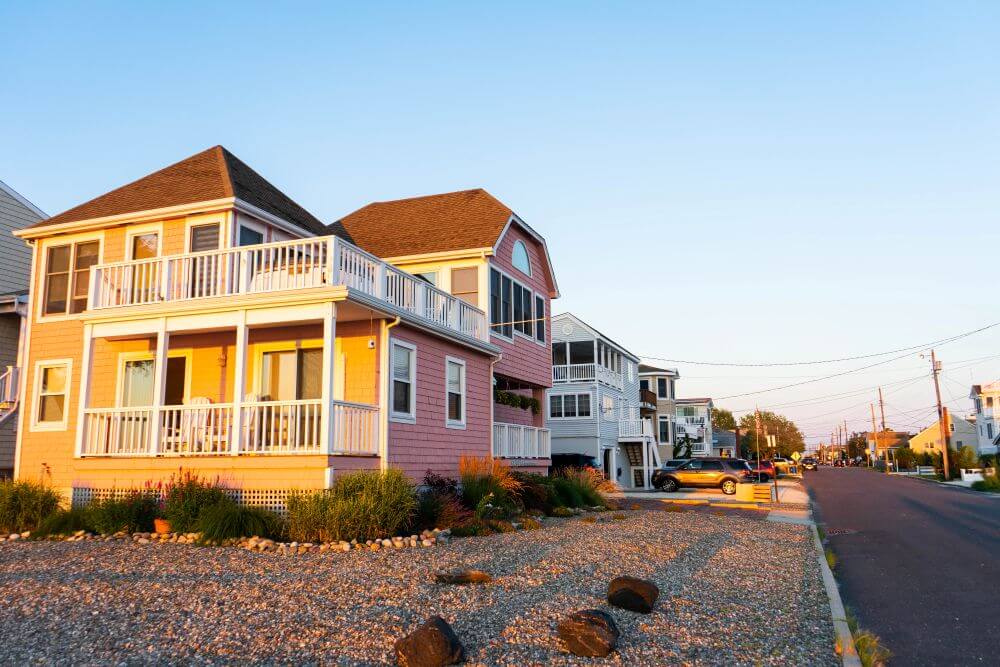

If you’re investing in a second home, there are some insurance basics that will help you make the best buying decision when it comes to determining insurability and estimating your ongoing cost of ownership. It can cost more to insure a second home than to insure your primary residence. Premiums are based on a variety of factors, like the amount of time that your home will be unoccupied, its location and the liability from renting the property.
Coverage Options
At a minimum, your lender will require that you carry hazard insurance to protect your property against damage from theft, fire, flooding or windstorms. It is also a good idea to add liability insurance, which covers you and members of your household for accidental injuries to your visitors. Opting for property plus liability insurance adds up to a standard homeowners insurance package. For an extra layer of protection, a personal umbrella liability policy extends your liability coverage for properties named in the policy.
Dwelling Fire Insurance
Since most homeowner policies require occupancy as a condition of insurance, the fact that you visit infrequently may preclude you from obtaining full homeowners coverage. Dwelling fire insurance is an alternate coverage option for insuring residential rental or non-owner occupancy property, including vacant property.
A dwelling fire policy continues to offer coverage for a home and other structures (detached sheds or garages, for example) for perils named in the policy. Named perils listed in a typical fire dwelling policy protect against damage caused by fire, collapse, lightning strike, wind, hail, explosion and smoke. For more coverage, consider adding personal property protection and liability insurance to a dwelling fire policy.
Renting Out Your Home to Others?
Whether your second property is an apartment unit or a family home, if you are renting the property, you will have little control over the physical damage that can occur. To mitigate your risks, tenant-occupied dwelling insurance will cover the costs incurred by damage, including fire, storms, burglary and vandalism. It does not cover your tenant’s personal property.
Renting your property furnished or unfurnished also has insurance coverage implications. If you are renting your property furnished, let us know. We can advise you on the best coverage options and whether you should consider requiring longer-term tenants to carry additional renters insurance.
As with all homeowners insurance, it is important to be sure that there is enough coverage to protect all of your property values and assets when you choose your policy.
Have a question? Get an answer. Learn more at ehd-ins.com or call us toll-free 1-800-544-7292. Our experienced insurance and risk management professionals would be happy to answer your questions, help you explore your options and develop a customized strategy for you and your organization.
About EHD
Established in 1896, Engle-Hambright & Davies, Inc. — now EHD — is one of the most respected insurance brokers and advisors in Pennsylvania and one of the largest and most reputable full-service insurance brokers in the United States. We have offices in Exton, Lancaster, Pittsburgh and Reading and offer commercial insurance, employee benefits, personal insurance and risk management services to businesses, non-profit organizations, public agencies and individuals throughout Pennsylvania, New Jersey, Delaware, Maryland and Ohio.
EHD has access to all regional, national and international markets, holding preferred status contracts among many insurers, which provide the leverage to negotiate the most favorable coverage and financial terms for our clients. We are absolutely committed to client service, and our staff of over 100 insurance professionals is among the most experienced and knowledgeable that you will find anywhere. It is no wonder why we are the partner-of-choice for over 5,000 organizations, with a client retention rate that approaches 100%.
Learn more at EHD-Ins.com or call 1-800-544-7292.
Note: not intended to be exhaustive, nor construed as legal advice. Readers should contact legal counsel and/or an EHD insurance professional for appropriate advice. Original content source: © Zywave, Inc. All rights reserved.